

“When you go to the mountains, you might come across rare butterflies. Seeing
stylish people gives me that same feeling.”
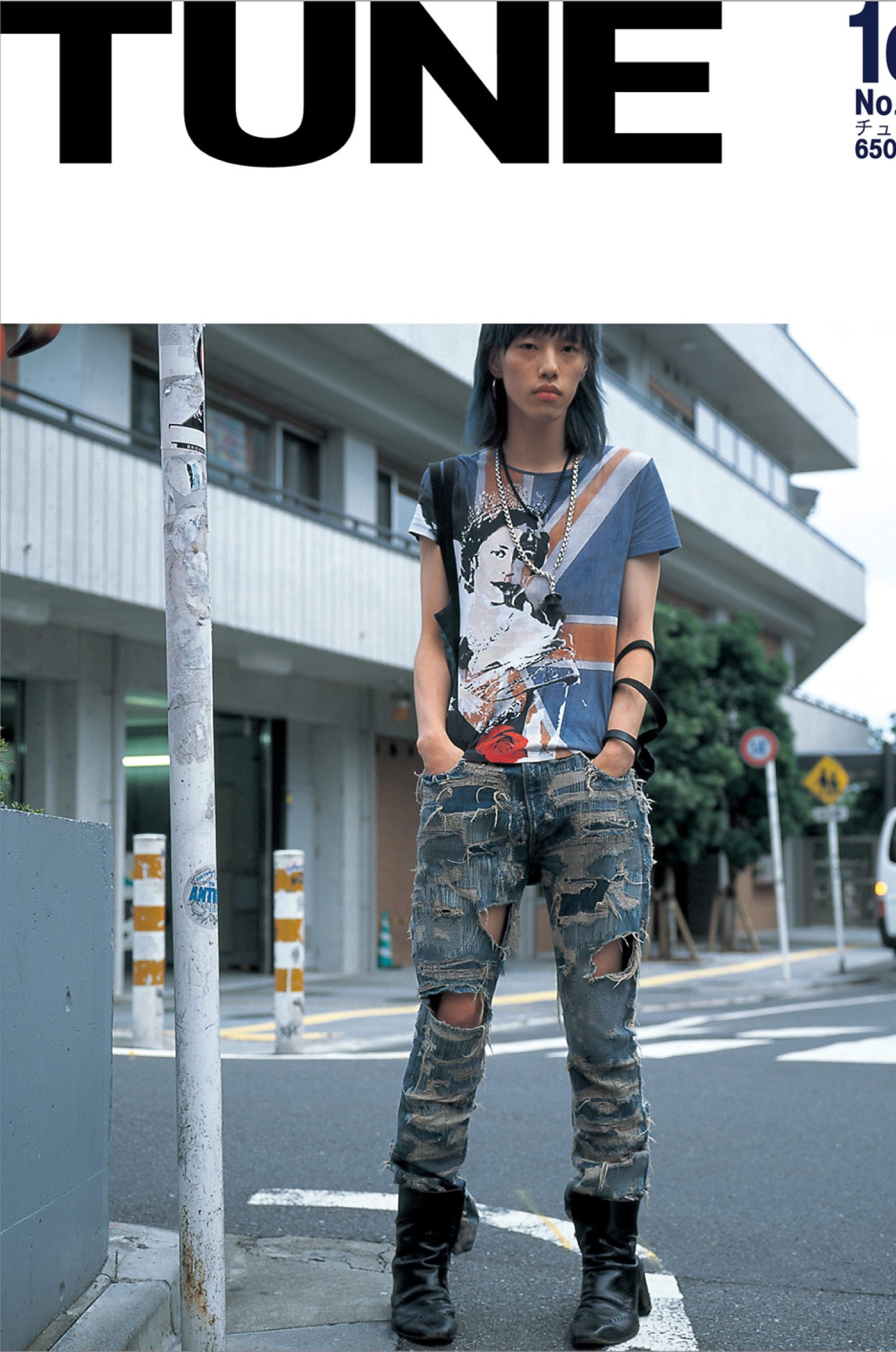
For nearly four decades, Shoichi Aoki has been documenting and archiving street fashion. He founded FRUiTS in 1996, a magazine that showcased the unique fashion of Harajuku, and its influence continues to resonate today across the world. Looking over the streets with a warm and observant eye, Aoki’s work has become an invaluable record of street fashion history. In the corner of the pages, the magazine featured a small Q&A section that gave a glimpse into the personal lives of the subject. The occasional carefree responses like “Where is your bag from: forgot” or “Where did you get your shirt: boyfriend” showed the freedom and everydayness of fashion. I had the chance to discuss with Aoki about how he has nurtured his relationship with the ever-changing world of street fashion.
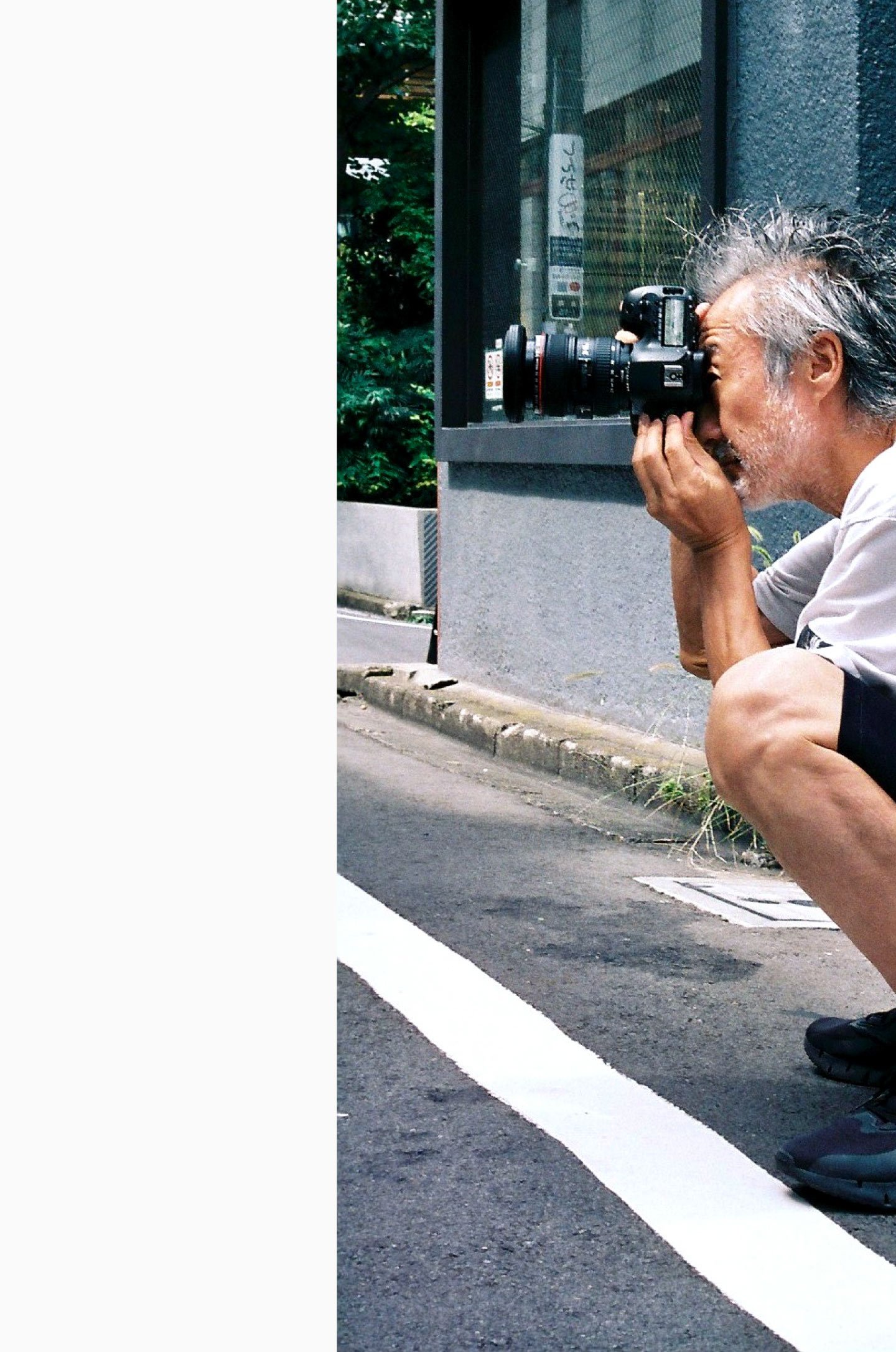
When people ask you what you do, how do you answer?
Aoki: I used to say that I publish magazines, but I’m not
publishing anymore. I don’t really consider myself a photographer either, so it’s hard to say. I recently
answered "street fashion collector" on a survey.
When did you first start photographing people?
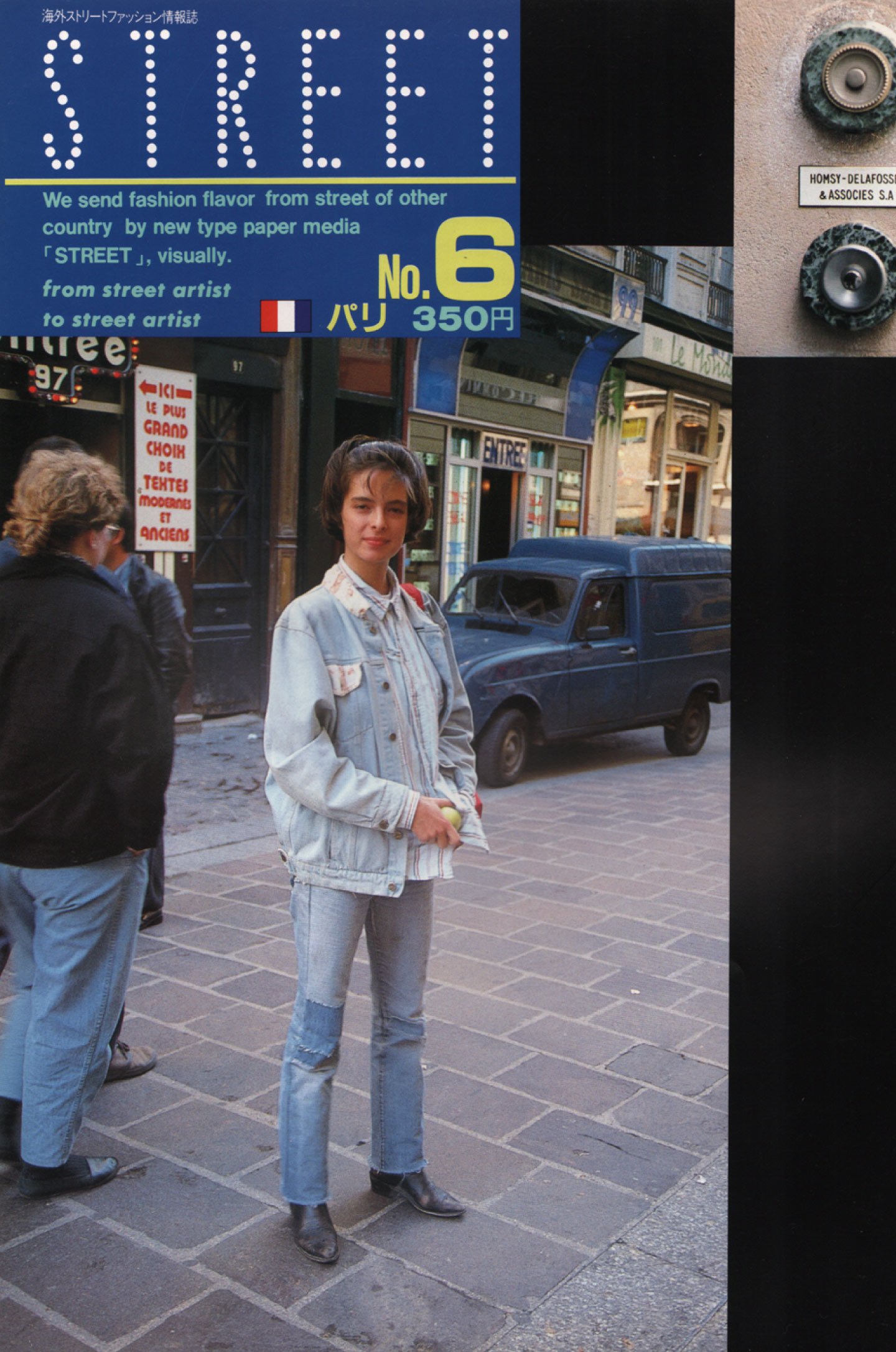
Aoki: It was around 1986, when I started STREET magazine. After
quitting work as a programmer, I wandered around Europe for around six months and spoke to people in Paris and
took photos of their outfits. That was the first time. At first, I didn’t plan to take the photos myself and
wanted to have someone else do it, but then I figured it might be better to do it myself.
I assumed that STREET was born out of you taking photos.
Aoki: At that time, no one was archiving street fashion. It
wasn’t even a concept in anyone’s mind. Around that time, brands like Comme des Garçons and fashion magazines
like Ryuko Tsushin were popular, and the general interest in fashion was growing, but real fashion is about
people wearing clothes, right? No one was paying attention to that, so I figured that would be my theme.
“I ACTUALLY TRY TO ELIMINATE THE PHOTOGRAPHER'S PERSPECTIVE.”
Nowadays, taking photos of what people wear on the street is common, but I
can usually tell when it’s one of your photos because of your unique perspective. How would you describe
your point of view?
Aoki: People often say that, but I take photos more as a record
so it’s not like I’m taking them as a photographer. I actually try to eliminate the photographer’s
perspective. Even when I had staff taking photos, I told them not to inject their personality into it. Some
people want to work for me because they are into photography, but that’s not really what I’m doing. For
example, if you were to photograph a Rodin sculpture, you wouldn’t add your own personality to it, right? The
focus is on accurately capturing Rodin’s work. The kids I photograph and their fashion are the main subjects.
That might be what makes my photos different.
Recently, I’ve been getting contacted to work as a photographer, but since I’ve always tried to remove the
“photographer” aspect from my work, I find it surprising that people ask me that. I think anyone could take
the photos I take, to be honest.
With hundreds of people passing by, I imagine your perspective or personal
taste must play a role in deciding who to photograph though?
Aoki: What I find stylish is probably something that would
resonate with anyone who loves fashion. So it’s not like I’m selecting who to shoot from a unique personal
taste either. I feel like my range of what I consider ‘good fashion’ is quite broad. I appreciate a wide
variety of styles.
What seems consistent is that your subjects seem to be true to themselves,
not just following trends.
Aoki: That’s a big factor. I tend to prefer people who manage to
avoid or ignore trends.
Your perspective seems to be one that “watches over.”
Aoki: Yes, or observing. When I’m making a magazine, I’m not
trying to make any fashion statements. I try to remain as neutral as possible, making sure not to miss
high-level fashion creation without bias.
“I WANT PEOPLE TO LOOK AT MY PHOTOS 100 YEARS FROM NOW AND THINK, 'THIS IS INTERESTING.'”
It’s a record of history that wouldn’t usually be preserved. They’ll
probably still be interesting hundreds of years from now.
Aoki: Exactly. In the early days of FRUiTS, I was the only one
taking those photos. If I hadn’t taken them, these outfits wouldn’t exist on record. I want people to look at
my photos 100 years from now and think, “This is interesting.” If I were to pass away now, everything
unpublished might disappear, so I need to start making sure they’re properly preserved.
I read that you’re planning to relaunch FRUiTS, but you mentioned before
that you originally stopped (in 2016) because there weren’t enough people on the streets that you wanted to
photograph, mainly because of fast fashion. But you also recently said that things have started to get
interesting again. Why do you think that is?
Aoki: I think a lot of kids have now grown tired of not dressing
up. Back then, those kids would come to hang around in Harajuku, where their friends would also come dressed
up in cool fashion. The general population would then witness that in public, and from there styles would
spread rapidly. But now there’s no place for that kind of in-person interaction, so things tend to fizzle out
quickly. There are still clubs and event spaces where people dress up to go to, but there’s no street
environment where fashion can mature. That’s something I’m struggling with. Anyone could do something like
FRUiTS online. But if people come just to get photographed, that’s not the direction I want to go. It’s hard
to archive fashion phenomena in the way I used to. It’s something I’m still figuring out.
Would you go hang out outside clubs then?
Aoki: I don’t really like clubs. (laughs)
I guess part of the appeal was the mystery — wondering who these people
were, where they were coming from and where they were going. Nowadays, you can just tag someone and click to
see their profile, but there was something special about not knowing. You’ve gone from being a programmer in
the digital world to working with print magazines, and now heading back to digital. What is the ideal media
format to you?
Aoki: I’m not particularly fond of print actually. It’s so
complicated. (laughs) There’s no loss of image quality with digital. I much prefer digital but the issue is
with value. My goal is to create something worth collecting, but it’s hard to establish value with just
digital.
I might consider something different if print were recognized as a luxury. Print used to be cheap. When people
see a T-shirt for 6,000 yen, they think it’s affordable. But if a book costs 6,000 yen, they hesitate.
European magazines are taking on the challenge of selling at high-prices but I don’t think any Japanese
publishers would go in that direction. I’d like to do something new, but it’s tough. I think I need to revisit
my original intentions. I’m getting older, so maybe it’s time to create a system that can function without me.
The philosophy behind FRUiTS doesn’t have to be confined to me; it could spread globally. I want to create a
system that properly archives and recognizes street fashion’s value.
Like a database?
Aoki: It depends on who’s taking the photos, but I’m thinking of
something with guidelines. When I first started FRUiTS, advertising agencies would try to get me to feature
certain bags, but I wanted to keep it as a documentary, an archive, rather than a commercial. Maybe I could
build something open-source, like Wikipedia.
You’ve seen various phases of Tokyo, particularly in Harajuku. Even in
this era, when influences from all across the globe are readily available at any time, there’s still
something unique to Tokyo street style. Across generations, what do you think is at the core of that
“Tokyo-ness”?
Aoki: When I visit Korea or other countries and then come back to
Tokyo, I realize that the kids in Harajuku are actually pretty stylish. While I’m in Harajuku for a while, I
think, "Come on, you need to step it up if we’re going to revive FRUiTS," but after going abroad and
returning, I see that everyone here really does make an effort. That’s something quite rare. In London, for
example, the level of fashion is high, but most people aren’t really trying to be fashionable. Lately in
Harajuku, though, you can sense that everyone is putting in the effort to look stylish. In Japan, many kids
are afraid of standing out, they worry they might not find a boyfriend or friends. But there's always been a
spirit of wanting to dress up, even going back to the Edo period. The way people wore kimono back then was
totally different from now, and there were some pretty avant-garde kids back then too, with new ways of
styling kimono. Maybe they were even more avant-garde than now. There wasn’t an entertainment industry like
today, so there were these famous kids on the streets, and others would imitate them. Maybe that sense of
shared understanding is still there.There’s definitely a social risk in not dressing up in Japan, which makes
things different here.
In this era of democratization of influence, I feel that street snaps can
have a huge impact on personal style. Growing up in the countryside with limited exposure to city streets,
FRUiTS was an invaluable way for me to connect with real, living fashion. Fashion suddenly felt much more
exciting and more accessible to me. Recently, scans of old FRUiTS magazines are being massively shared
across platforms, reigniting the boom, and Gen Z’s who weren’t born when the magazine was first published
are now buying them at high prices through auction sites etc. Why do you think this is?
Aoki: There’s definitely been a huge surge in popularity
recently, especially from overseas. People know about it, and it seems to resonate again. It’s strange; I’d
actually like to know the reason myself. I talked to foreigners who say they’ve been following FRUiTS for
around 20 years and that they grew up with it. It’s happening in places I didn’t even know about. Sometimes
copyright issues can lead to positive outcomes. Some kids upload images to Tumblr without permission, but
that’s how people get to know about it, so I think being too strict can stifle culture. It’s like graffiti in
the streets—there’s good and bad. We need to distinguish between the two. It’s all about who makes that
judgment.
Is there any movement in street fashion that you’re particularly looking
forward to? Anything you hope will happen?
Aoki: We could say that about fashion in general, but I think it
takes one individual who’s a genius to change the scene, so I’m waiting for the next genius to emerge. But
when they do appear, they often disappear quickly if there’s only the internet. I think FRUiTS played a role
in nurturing those talents. Someone once said to me, "When a really stylish kid appears, they often look a
little uncool at first." That’s exactly it. When someone starts something new in fashion, there’s a sense of
awkwardness because it’s still in its early stages and often runs counter to the trends. That’s why it’s
important not to miss those moments. I used to tell my employees at FRUiTS that they didn’t need to photograph
someone if they looked stylish to everyone. It’s about not missing someone who is taking a risk. Even Kyary
Pamyu Pamyu was like that in the beginning—she had this weird style, and then she gradually found her groove.
When she first appeared in FRUiTS, her style had this odd balance to it, but that’s what made it great. Before
someone gets called their style “weird,” someone needs to recognize and appreciate it.
You usually spend your time in Harajuku, but today we did the shoot around the AMBUSH headquarters in Shibuya. How did you find it?
Aoki: It was great. It made me like Shibuya. I actually feel like I’d like to spend more time here. There are lots of stylish people, and the area is just the right amount of messy. (laughs) Plus, it’s a little off the main streets, with delivery trucks and parking lots nearby. That’s probably what makes it good. I thought it was going to be quiet and too settled down, but spending the day here, I found it lively and appealing.
Do you have any memories with AMBUSH?
Aoki: I have a lot of memories with AMBUSH. YOON was in FRUiTS even before she debuted. I’ve been following their history since she started making accessories. AMBUSH is a fascinating success story. Both founders have exceptional talent and have always been unique.
Do you have a collecting habit?
Aoki: Hmm, I’m not sure. But when I was younger, I used to collect butterflies. I’d go to the mountains and catch them, then make them into specimens. I did that when I was in middle school, and it’s kind of similar to what I do now.
When you go to the mountains, you might come across rare butterflies. Seeing stylish people gives me that same feeling.
Do you enjoy photographing people?
Aoki: It’s not so much about enjoyment. It’s like when you go to catch butterflies—it’s hard work. But there’s a sense of joy when you capture a rare butterfly. It’s the same feeling of responsibility, knowing that if someone doesn’t record this fashion, it will disappear.
Magazine Image courtesy of Aoki Shoichi
Interview: Yuki Kasai-Paré
Photos: Yuki Kasai-Paré